Videographer vs. video production company: What’s the difference?
On the face of it, there’s a lot of crossover between videographers and video production companies. But there are substantial differences too. We’ve worked across both spaces, and in this article we explain the similarities, differences, and how to make the right choice for your project.
Last updated: March 2026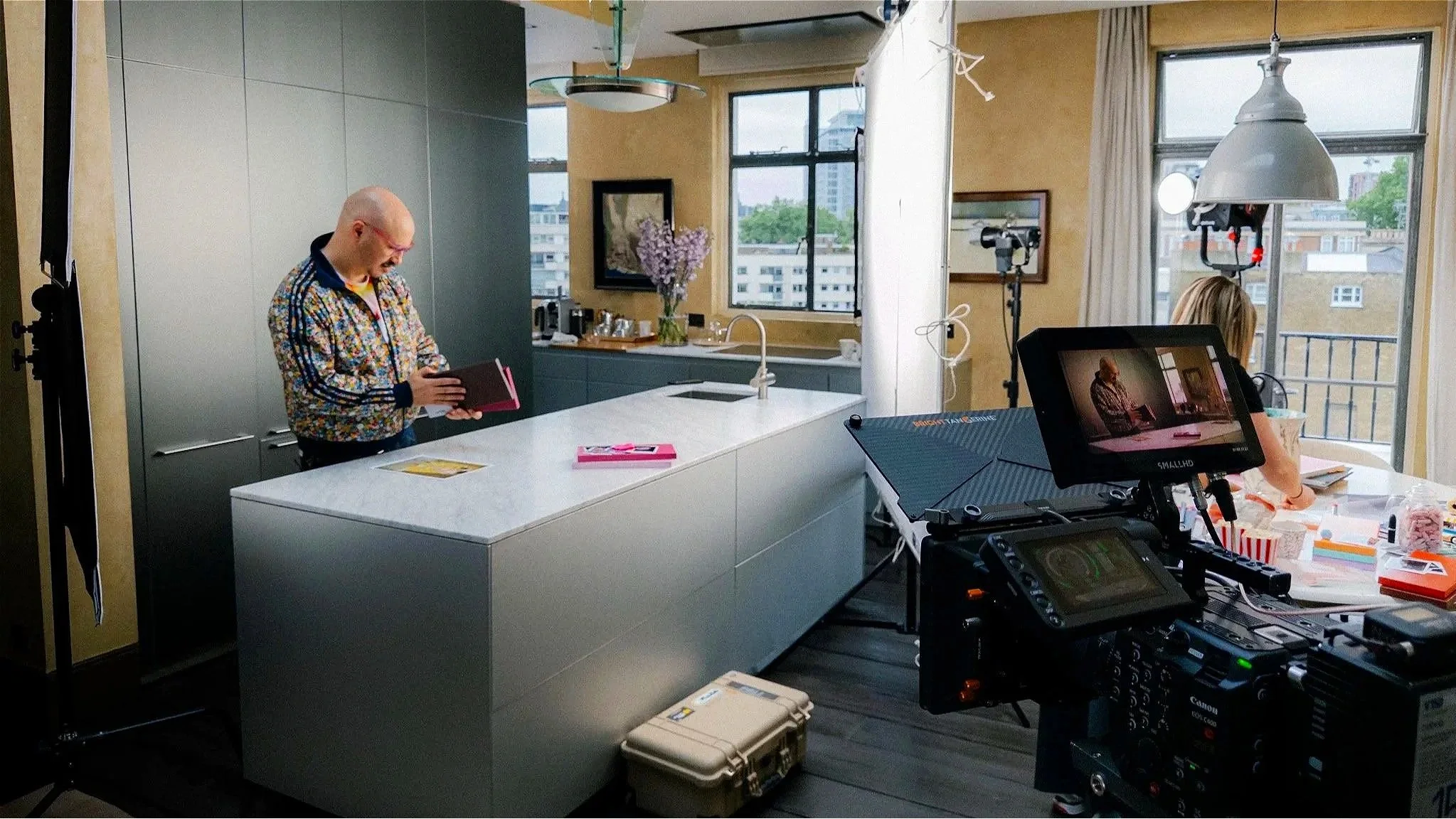
You have a project that needs video. There are countless London video production companies, and even more videographers to choose from. All of them provide filming and editing services. So what’s the difference? And does it really matter?
One is not automatically better than the other. They’re just different approaches, operating broadly within the same industry. But understanding the difference, and which option is right for your project, is really important. And shifts in the industry, along with advances in camera and production technology, have slightly blurred the boundary between the two.
We are a case in point for this. When I first started working in video, I described myself as a videographer and spent several years working mostly solo on a range of different projects. Then, as capabilities improved, the scope and scale of the projects we were being asked to work on started getting bigger. Today, we operate as a small video production company in London, regularly working with clients from start to finish. We often help with ideation and concept development, proposing creative treatments for different projects that tie in with broader strategy. Shoots involve multiple crew members, and post-production often involves people with different specialisms – from sound design and colour grading to motion graphics and VFX. But there are many aspects of the approach I took as a videographer that I still bring to work everyday. So let’s get into it.
What does a videographer do?
The scope of work
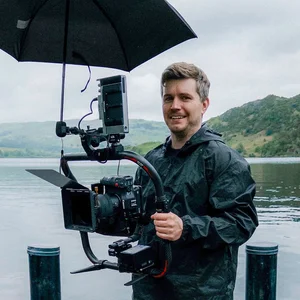
A videographer will usually work on their own, or sometimes as part of a small team. The general expectation is that they will handle the entire process – filming, as well as basic lighting and sound – and then editing to create your finished films. Most of the time, they will be following a strict brief provided by the client, and from our experience, the focus of videography work tends to be on capturing an event as it unfolds, with minimal intervention or creative direction.
Pros and cons
There are lots of benefits to working with a videographer. They are typically cheaper than a video production company. They work alone, or occasionally as part of a small team, so their presence is often less disruptive to your event or workplace. They typically work with fairly streamlined equipment (at least compared to a video production company), and so setup times should be faster. And as a smaller operation, they are often more able to take on last-minute projects.
These things make them a great option for lots of different use cases: events and conferences, simple interviews, behind-the-scenes content, weddings, and projects that need a quick turnaround. But in other cases, those same factors can also become limitations.
What does a video production company do?
The biggest difference between videographers and video production companies is their approach.
The scope of work
Production companies are interested not just in what you want to film, but also what that video content is supposed to achieve, who the audience is supposed to be, and where they’re likely to watch it. Projects are designed and engineered for maximum impact, usually following a methodical workflow, and this information plays a really important part in making sure that your films are not only beautiful to watch, but also strategically grounded. Because of this, video production companies tend to invest heavily in pre-production.
A video production company’s involvement typically starts much earlier in the creative process. Many production companies describe themselves as “full service”. But what does that actually mean?
Well, in practice it means slightly different things at different companies, and the level of “full service” each project requires will vary too. But in general, it means exactly what you might expect: that they can help you with every stage of a full production process, from initial ideation and strategy through to filming, post-production, and final delivery.
Pros and cons
Instead of working with just one person, you’re likely to find a range of different people who work across different aspects of the production process, from producers who handle the practical aspects of the project, to directors who mould the creative, to cinematographers, editors, and many other roles.
A video production company is also likely to bring a much more comprehensive range of equipment, and this will have a big impact on your day on set too. Operating with more equipment isn’t just for the sake of it, it allows the crew to exercise more control over every setup on the shoot and a larger selection of available equipment will mean fewer compromises have to be made on the day. Most production companies will also provide a client monitoring setup so that you’re able to watch exactly what is being filmed – making sure the work meets your expectations – without needing to peer over the shoulder of a camera operator all the time.
On the other hand, if you’re short on time, the more comprehensive approach taken by a production company may not be compatible with tight deadlines. In those cases, if you’re happy to sacrifice a bit of production quality, then the agility offered by a videographer might be a better solution.
How to choose?
Cost matters, and will of course play a significant part in working out the right option for you. We would recommend thinking about value not only in terms of financial cost, but also in terms of outcome. What is the intent of the videos you want to make, and what is the value of achieving (or not achieving) that? Then weight that up against the quotes you receive for the work.
The choice over which option is better – videographer or full-service production company – ultimately depends on the project, and our opinion is that there are undoubtedly benefits to both approaches. There are plenty of cases where a videographer will deliver exactly what you need, making it a smart and logical choice. But a low-cost video that doesn’t deliver its intended outcome is not a sound investment, and there are also plenty of cases where the more strategically-informed approach of a video production company might be a better choice, delivering video content with stronger messaging, greater audience-focussed impact, and better brand consistency.
We said at the top of this article that, to some extent, there is now a growing overlap between the work of videographers and video production companies, and a lot of the work we currently do sits in the middle-ground between these two camps. We’re not a big operation, which means we can operate with greater agility and smaller crews (though rarely solo), bringing some of the benefits usually found with videographers to the table. At the same time, our focus is on making films that are not only beautiful but also effective. Wherever possible, we complete thorough pre-production and follow a methodical, strategy-informed workflow for all projects. Experience shows that this early-stage work pays huge dividends not only in terms of the look of the finished films, but also in the impact they have in the weeks, months, and years after release.
If you’ve decided that a production company is right for you, find out more about our work as a video production company in London, including the services we offer, how we work, and how to get a quote. If you’re still not sure which path is right for you, feel free to get in touch for some advice.
Further reading: