What is post production? A guide to everything that happens after a video shoot
Post-production (sometimes referred to simply as ‘post’) is the last of the three main stages of the video production process: pre-production, production, post-production. This is what the process looks like at our video production company.
Last updated: April 2026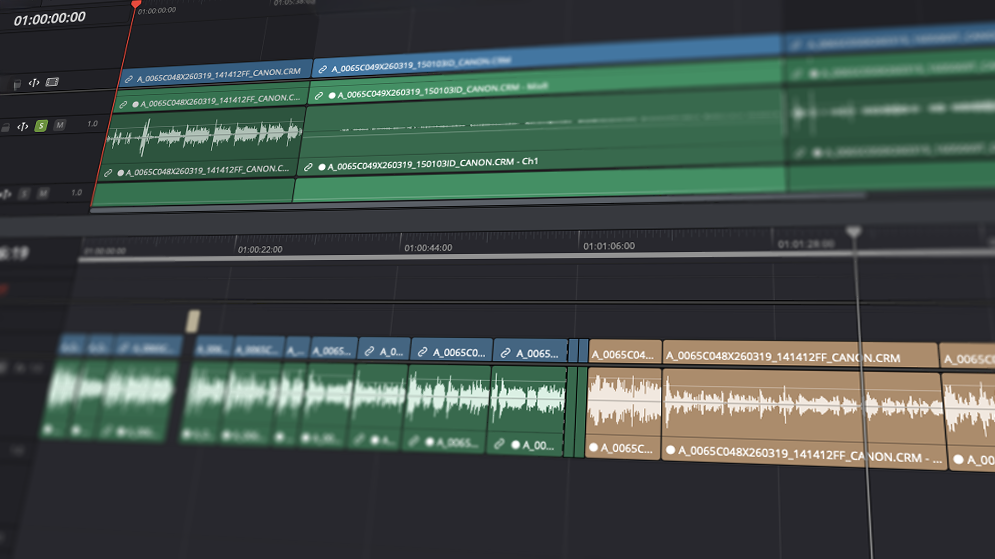
Footage and audio clips on a timeline in editing software Davinci Resolve
A simple post-production definition
We define post-production as everything that happens after the production stage (the shoot) has been completed to turn that footage into a finished film. It’s where the raw material captured by your video production company is organised, edited together, elevated with colour grading and sound design, finished with any graphics requirements, and then delivered in the formats you need.
It’s the last stage of a process that begins long before the cameras roll. If you'd like to understand how it all fits together, you can read more about our end-to-end London video production services.
Our post-production process
Not every production company will follow the same process, but they should at least look similar. These are the steps that make up our post-production process on a typical project:
1) Ingest, backup, and organise
Before any editing takes place, the footage we’re working with needs to be safely stored and organised. This includes:
Copying footage from memory cards (we’ll usually do this at the end of a shoot so that we know everything has safely transferred across)
Ingesting that footage into the system in the studio and creating backups
Organising the footage into folders ready for editing
Synchronising the audio and video footage
2) Assembly and rough cut
This is where the editor puts together the first assembly of what will become your film.
We’ll select the best takes
Work out a logical narrative structure from the material we have
Experiment with the pacing of the edit
The rough cut is all about figuring out narrative, structure and pacing than it is about adding polish, so it is normal for the edit to feel unfinished at this stage.
3) Refine and review
Once the rough cut has been approved, we then move on to refining the edit. This is where we start adding in all of the other elements that will help to make it feel more complete.
We’ll look at the timing and pace again, and tighten this up where appropriate
Improve the clarity and strength of the messaging, with audience attention in mind
Screen for repetition and remove it if needed
Layer in b-roll and any other supporting footage to make the film more visually engaging
We typically work through up to three rounds of revisions at this stage (V1, V2 and V3).
4) Picture lock
‘Picture lock’ means that the edit is approved and ‘locked’ so that the timing will not change (except in extreme cases) for the rest of the post-production process. It’s really important to get to picture lock before moving to the next stage because revisiting the edit once the finishing stages are underway becomes much more complicated and expensive.
5) Sound mix, music, and design
Sound plays a hugely important role in creating the atmosphere in a film, holding the viewer’s attention, and ensuring the messaging lands clearly and cleanly. These are some of the main tasks we would complete at this stage:
Cleaning and mastering the dialogue
Layer in supporting audio effects (sound design)
Selecting appropriate music (or commissioning it) and aligning it with the edit so that the builds and lulls in the music match the narrative structure of the film
Mix and master it all together o that everything sounds clear and balanced
6) Colour correction and grading
This is where we work on the visual appearance of the footage we captured during the shoot.
In commercial filmmaking, footage will almost always be recorded in LOG. To the eye, this footage looks grey and washed out – but recording in this way helps to maximise the dynamic range that is captured by the camera, giving the colourist greater flexibility when correcting and grading the footage later on.
Prior to this stage, you will most likely have seen a ‘normalised’ version of the footage – a straightforward conversion of the footage from LOG to Rec709, making it look more like normal video. Colour correction and grading is where we roll that general conversion back and work shot by shot to make your film look as good as possible.
There are two parts to that process:
Colour correction is mostly technical and concerned with making sure that scene-to-scene, the shots are consistently exposed and balanced. This gives you a shared starting point for the colour grade.
Colour grading is much more creative. It’s about enhancing the images in line with the intentions of the cinematographer/videographer, and giving the project an appropriate ‘look’.
7) Graphics, titles, and captions
At this stage, we’ll add any graphic and text components needed to finish your films. This can include:
Lower thirds (names and titles that appear on screen with interviewees)
Titles and other on-screen text elements
Any finalised motion graphics assets
Captions (often referred to as subtitles)
Branded end frames, lockups, and logos
8) Export, final checks, and delivery
Your project is now finished and ready for export and delivery! This is also where multiple deliverables are created and tailored for different platforms.
How long does post-production take?
There’s no fixed answer to this question. It depends on the scope of the project, the complexity of the edit, the extent of the motion graphics and animation requirements (if any), and – importantly – on the quality of the pre-production completed before shooting even started.
For a simple interview-based project, post-production can sometimes be completed in as little as a few days. For a more complex brand film that requires different levels of input and approvals, it can take weeks.
How can I speed up the post-production process?
Outside of reducing the scope of the project itself, there are two big things we would recommend to clients looking at to speed up the post-production process:
Invest in thorough pre-production: Pre-production is all about putting in place a solid plan and reducing the impact of potential problems and pitfalls. If done well, your editor (and wider post-production team) should have a very clear idea of both what they are making and the material they have to do it with. It’s a little like the difference between presenting them with a 100-piece jigsaw puzzle and a 1000-piece jigsaw puzzle. We say it often, but skimping out on pre-production is a false economy.
Consolidate feedback and involve senior stakeholders early: When producing work for large companies, whether that’s a global brand film or corporate video production in London (or elsewhere), we know that approvals are sometimes complex and require input across different levels of the business. But it’s really important that this feedback is sought out and consolidated before we get to picture lock.
It’s an all-too-common situation for a film to be finished and ready for delivery, and for a senior stakeholder to then see it for the first time and request root-and-branch changes to the edit. We’ll always do everything we can to accommodate those requests, but it invariably requires more time and increases your costs because we then have to roll back to a much earlier stage in the process.
Getting senior stakeholders to have a quick look and provide top-level feedback earlier in the process greatly reduces the chance of this happening, and investing in good pre-production is another great way of making sure that there is complete creative alignment across the project.